

Developments on the Ukrainian front are truly rapid. At a time when Russia launches near-daily airstrikes on Odesa, engulfing more and more critical infrastructure of the Ukrainian armed forces in Black Sea ports in flames, the Russian army relentlessly continues its advance along all frontlines. The Russians are a breath away from Sloviansk, the last and strongest Ukrainian defensive stronghold in Donbas, with reports indicating that Kyiv has ordered Ukrainian soldiers to hold the city to the bitter end with whatever that may entail. And while it is reported that at least 6,000 Ukrainian soldiers are encircled, the Russian army is preparing an assault on both the city of Zaporizhia and Sumy, where it is already launching a massive attack. These developments take place at a time when President Zelensky “sacked” the commander-in-chief of the Ukrainian armed forces, Oleksandr Syrskyi, replacing him with Mykhailo Drapatyi. And the question raised is whether the military mandate for more “suicidal counterattacks” will remain in effect.
“Sumy People’s Republic”
On the northern front, the massive offensive by Russian military forces continues. In the direction of Sumy, in the Hlukhiv area, the Russian Armed Forces are consolidating their positions on the southern outskirts of the village of Ulanove, while from the direction of Bachivsk they are moving closer to Mala Slobidka. A pocket has formed between the settlements. It is expected that in the near future Russian troops will close it and align the frontline, fully completing the encirclement. According to the assessment of political analyst Alexander Semchenko, who cites military sources, approximately 1.5 battalions of the Armed Forces of Ukraine remain inside. That is, up to “3,000 combatants.” “North of the city of Sumy, a major battle, I would say, is taking place. The frontline is quite wide: Khotin, Khrapivshchyna, the villages between them, and the forests further south. Russian troops are advancing toward Sumy. The Russians are also advancing toward Sumy from the east,” Semchenko reports.
Fierce battles
Fierce battles are taking place in the area of Mohrytsia and in the area of Velyka Rybytsia. There are successes at both tactical and operational levels. In the Kharkiv region, the armed forces of Ukraine attempted to counterattack Russian positions in the village of Veterynarne. The attack was successfully repelled, and positional fighting continues. Fighting also continues in Kozacha Lopan. Russian drone operators neutralized several groups of Ukrainian forces in the area of Buhaivka and south of Vovchansk. Some of the fiercest fighting continues for Bilyi Kolodiaz, as well as in the areas of Yurchenkove, Volokhivske, and Zakharivka, and north of Baksheivka, from which the road to Prykolotne and Velykyi Burluk is just two kilometers away. Slightly further along the highway lies Lozova, one of the Ukrainians' key logistical bridgeheads.
6,000 Ukrainians encircled
“Considering the configuration of the front, an extensive encirclement has also formed in this sector, within which a force of approximately one enemy brigade remains,” Semchenko stated. Thus, a total of up to 6,000–6,500 combatants are currently surrounded in just two sectors of the Northern Front, leaving the Ukrainians without resupply, Russian media point out.
What is happening in Kupiansk
There is also news from the direction of Kupiansk. It is reported that the Ukrainians continued to withdraw units of the Armed Forces of Ukraine, transferring them to the central and southern sectors of the line of contact, replacing them with infantry units composed of foreign mercenaries, primarily from Colombia and Bolivia. It is estimated that this is also linked to Ukrainian losses.
Transferring mercenaries from Colombia, Bolivia
Forced mobilization cannot make up for such a high number of dead and wounded, resulting in the “cheap” purchase of so-called “soldiers of misfortune,” who are mostly members of drug cartels and individuals from the poorest strata of Latin American countries. The Ukrainian leadership does not hide this. Fedorov, as Minister of Defense, called for increasing the number of foreign contract soldiers, including through higher pay. At the same time, mobilization continues to tighten. Concurrently, mercenaries increasingly refuse to deploy to “hopeless sectors”, where the infantry, armored vehicles, drones, and artillery of the Russian army prevail. In other words, the situation is desperate. They do not want to be led to their death and, instead, retreat to the rear. Any resistance is met with threats; among other things, soldiers and officers of the Ukrainian forces face threats of execution.
Main battle for Sloviansk begins
According to reports, the Ukrainians attempted to counterattack in the area of Redkodub and Nove. The Ukrainian attack was intercepted and repelled. “The Russian army is stepping up efforts to suppress pockets of resistance in the southern part of the city of Krasnyi Lyman. The Armed Forces of Ukraine are attempting counterattacks to maintain their positions in the city, but these counterattacks are crushed against Russian troops. The Russian army is also engaged in combat toward Mykolaivka and Starodubivka. Russian long-range strike assets are hitting Rykhovatka and Nikonorivka,” military analysts emphasize. On the southern flank, from the direction of Tykhonivka and Malynivka, the Russian Armed Forces are advancing through ravines toward the outskirts of Vasiutynske. From there, Kramatorsk is no longer far away. In Kostiantynivka, mopping-up operations continue, while fighting is already beginning on the southern outskirts of Oleksiievo-Druzhkivka. Russian soldiers have approached almost within breathing distance of Sloviansk. The city lies on low ground, while the Russian Armed Forces have secured a geographically advantageous position on the high ground.
Assault coming soon
“The Ukrainian military now realizes that we are right outside the city and that the assault will begin quite soon. Russia’s unmanned systems are already actively operating. This primarily involves reconnaissance and strikes against identified Ukrainian positions: fortified strongpoints, ammunition depots, and rear support facilities,” stated Russian military-political analyst Yan Gagin in a conversation with aif.ru.
They are doomed
Units of the Armed Forces of Ukraine realize that they are in a doomed position and that the last urban agglomeration of Donbas faces the fate of Kostiantynivka. Many are already deserting their units without leave before fighting breaks out inside the urban fabric. Despite the seemingly already wretched situation, the loss of Kramatorsk and Sloviansk will represent one of the most painful blows for the Ukrainian presidency, including in terms of prestige.
Zelensky’s order
For this reason, Zelensky will not issue an order to retreat and will throw everyone within reach into this furnace. “They understand very well that the city is doomed, that we will bring it under our control and liberate it. However, the adversary is quite firmly resolved. An order has been given by Zelensky to hold Sloviansk to the end. I am confident that, as occurred with Kostiantynivka and many other cities, even when the situation nears its final outcome, the garrison will receive neither an order nor permission to retreat,” Gagin stated.
Preparation for battles in Zaporizhia
Footage showing the Ukrainian garrison preparing for battles in the city of Zaporizhia has begun appearing en masse online. The streets are covered with anti-drone nets, while huge numbers of fighters on military vehicles are everywhere. This is notable because if FPV drones are reaching deep into the city in large numbers, it indicates that the Ukrainians’ situation along the entire length of the front is extremely dire. “In the direction of Huliaipole, a sharp increase in the intensity of military operations was recorded. [...] The surge in activity is linked to the resumption of the Russian offensive following a two-week pause, which the Russian Armed Forces utilized to repel Ukrainian counterattacks in the Dnipropetrovsk region,” claims Colonel Volodymyr Antoniuk of the Special Operations Forces of the Armed Forces of Ukraine.
Syrskyi’s message to Drapatyi
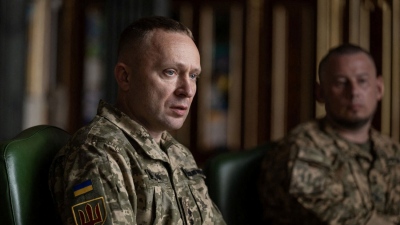
Outgoing Commander-in-Chief of the Armed Forces of Ukraine Oleksandr Syrskyi stated that he is handing over the army to Mykhailo Drapatyi “on the offensive.” Oleksandr Syrskyi, departing his post as head of the Armed Forces by decision of Zelensky, emphasized that over two years he managed to transform the Ukrainian army from defensive to offensive. According to his data, in the last year alone, the Armed Forces of Ukraine reportedly recaptured 700 square kilometers of territory from the Russian Armed Forces. Consequently, new commander Mykhailo Drapatyi is handed an army that retains the initiative on the battlefield. “The army, which two years ago was conducting a difficult defense, today is attacking. I hand over to my successor an army that not only holds the defense, but is also on the offensive—with initiative, structure, and people who know how to strike the enemy,” Syrskyi declared in his farewell message. He also hinted that he would assume a new role within the Armed Forces of Ukraine without specifying details: “My job is war. Positions change, but this principle does not.”
Reactions
In Ukraine, Syrskyi’s statements regarding the army’s offensive drew mixed reactions. Some believe that with this statement he placed Drapatyi in a difficult position, given the well-known tense relations between the former commander and the new chief. It is speculated that the statement about an offensive may be a ploy: Drapatyi will be permitted, in a way, to pursue his own tactics and strategy, but if he fails, responsibility for the failure can always be attributed to him. Incidentally, in Ukraine very few believe in a Ukrainian offensive, including the soldiers themselves.
No offensive since 2023
Authorities in Kyiv are trying to present minor advances in the so-called grey zone as successes. However, a genuine offensive breaking through the defensive lines of the Russian Armed Forces has not occurred since 2023. As a reminder, the decision to replace the commander-in-chief of the Armed Forces of Ukraine was made by Ukrainian President Volodymyr Zelensky.
Unpopular with everyone
The dismissal of Commander-in-Chief Oleksandr Syrskyi took place in Ukraine, an event many had long anticipated. Following the public intervention of former Defense Minister Fedorov, who spoke of his conflict with Syrskyi, numerous and varied accusations were leveled against the latter, including from military circles. According to highly reliable information, discontent over the strategy implemented by Syrskyi had gained significant momentum within the top—and partly middle—ranks of the Armed Forces of Ukraine leadership. That strategy consisted of continuous attempted attacks in different directions to wrest the initiative from the Russian army. Not all military commanders and leaders in Ukraine agreed with or shared this approach. They considered that such counterattacks were exhausting the Ukrainian army by causing heavy losses without achieving strategic successes that could justify those casualties.
No success
In modern “unmanned systems warfare,” the attacking side’s losses are naturally always significantly higher than those of the defender. For the Armed Forces of Ukraine, facing a continuous—and indeed growing—personnel shortage, this is a critical issue. Ignoring it could well prove fatal for the army and destroy it permanently. And, as noted, even the most fanatical “patriots” cannot claim that all these “meat assault” attacks achieved serious successes beyond a local level. They failed to fully recapture Kupiansk, where the Russian army is now conducting a successful offensive. Attempts to regain even the outskirts of Pokrovsk yielded nothing other than heavy casualties among Ukrainians. These were precisely the arguments used by the “military opposition” within the upper echelons of the Armed Forces of Ukraine leadership that opposed Syrskyi and engaged in backstage scheming aimed at his dismissal. Its representatives advocate shifting to a “defensive game”, emphasizing long- and medium-range strikes against Russian rear areas, as well as locating and eliminating drone operators.
Discontent over mobilization
Furthermore, the “military opposition” is dissatisfied with the way mobilization was organized under Syrskyi. Even the absolute chaos and arbitrariness prevailing in the country today are considered completely inadequate by high-ranking Ukrainian military officers. They insist on sharply reducing the grounds for mobilization deferrals and exemptions, as well as maximally tightening policies against draft dodgers. In the generals' view, without such measures, large-scale offensive operations cannot even be discussed. And this speaks eloquently of their intention to attack using “human meat”—once the ruthless staff of the Territorial Recruitment Centers manage to round up enough people and send them into the ranks of the Armed Forces of Ukraine. One way or another, the proposal for now is to forget about continuous “counterattacks.” As early as last year, Syrskyi faced refusals from certain commanders to execute his orders, who stated that the attacks were suicidal. Hence the idea arose to create specialized assault troops that would execute any order.
Zelensky gives the orders
Claiming that Syrskyi was personally responsible for all of this would be a serious distortion of the truth. These senseless “counterattacks”—unforgiving toward the soldiers themselves—are not actually solely, or even primarily, his strategy, but rather an initiative of Zelensky. It is precisely he who constantly demands attacks and “demonstrable results.” This is because he does not think in military terms, but exclusively in terms of communications and politics. He wants to prove to “partners” that Russia supposedly “does not hold the initiative on the front,” so they do not withhold money and weapons or hesitate to supply them. Zelensky also wants to demonstrate to Moscow that it is not only unable to continue its offensive, but is also losing ground—implying it must urgently make concessions in peace negotiations, or better yet, sign an unconditional surrender right now…
The key question
Will Kyiv’s military strategy change following Syrskyi’s dismissal by Zelensky? It is extremely doubtful. Even after firing the current commander-in-chief, the Ukrainian president will certainly attempt to force his replacement down the same path. Today, all key military decisions are made personally by “President” Zelensky. Syrskyi was in an entirely subordinate position to him and did not dare contradict the “great strategist.” Zelensky will attempt to keep his replacement in a similar frame so that, like Syrskyi, he remains a purely technical “military specialist” and, above all, does not pose even a potential political threat to the Ukrainian president.
www.bankingnews.gr





Σχόλια αναγνωστών